Explore the Legacy
Discover the lineage, theory, and methodology of politicized somatics, and celebrate the milestones and impact of gs’s groundbreaking work and transformative offerings.
This legacy page encapsulates the essence of gs during its creation and impactful years. Much of the content is presented in the present tense, as these are the original statements reflecting our values, mission, and vision - embodying the beliefs and aspirations we held during our active years. We hope this historical document stands as a testament to the lasting impact we aimed to create.
Select a value:
We support collective embodied transformation that reminds us of our interdependence with all life and helps to grow the foundation of trust necessary to welcome it.
We understand that no single being exists in isolation; that in fact, our survival depends on other people, animals, plants, air, land, soil, and water.
Valuing interdependence is a commitment to building and maintaining abundant, life-affirming, and dynamic movements and communities based on compassionate, dignified, and sustainable connections
We respect the inherent worth of all life and land.
Valuing mutual dignity rejects using life as a means to an end, and a commitment to resisting state violence, colonization, genocide, imperialism, and repression that systematically undermines whole communities’ and peoples’ sense of dignity.
Valuing mutual dignity includes understanding leadership as power-with rather than power-over others, and holding each other accountable to our commitments with love.
Valuing the power of a transformative path is a commitment to rigorous and sustained practice and ongoing embodied change that is integrated into our lives, organizations, and movements.
We are challenging the prevalent individualistic orientation toward and commodification of ‘self-help’ and ‘self-care.’
Being on a transformative path over time allows for the deep healing required to find a clearer vision, undo old habits, embody new behaviors, and imagine and create the foundation for a more just and liberatory society.
We value generativity, which is a creative state that channels and allows for authenticity, resilience, and opening to new possibilities, especially in the context of complexity and conflict.
Generativity allows us to move beyond reactivity and has us take action from a place of choice that is aligned with what we care about.
We understand conflict as generative as the capacity to effectively engage in and transform interpersonal and organizational challenges and breakdowns in a way that creates more dignity, trust, and connection for everyone involved. This includes the capacity to ask for and provide accountability and repair.
We value living, acting, leading and organizing, from deep individual and collective purpose.
Embodied transformation supports the development of the skills needed to clarify and align with larger purpose—so that our organizing, movement building, and actions can be more strategic and effective in moving toward liberatory systemic change.
Select a button below to learn more:
To transform, to create embodied change, somatics starts with the question of commitment. Who and what is important to you? What’s your vision? What do you long for? What future do you want to build? Then we explore our habits, automatic reactions, and embodied survival strategies. We begin to feel and perceive our individual and collective “current shapes”. At this phase in the Arc we also explore our resilience, and how to make it a purposeful practice.
Next, in somatic opening, we get to change and deconstruct the embodied patterns that no longer serve us. Through opening, we are often healing wounds and developing more capacity to feel and to be skillful amidst feeling and change. Somatic opening is the pragmatic process of deep transformation, shedding to change.
Somatics then moves us toward embodying new ways of being and action that align our values, longings, and actions. Often our social conditions and our family and community experiences do not teach us the embodied skills we need. This focus on developing embodied skills, whether it’s centered accountability and liberatory use of power, building deeper trust through conflict, or the capacity to be with the unknown or love more deeply, is essential to sustainable change.
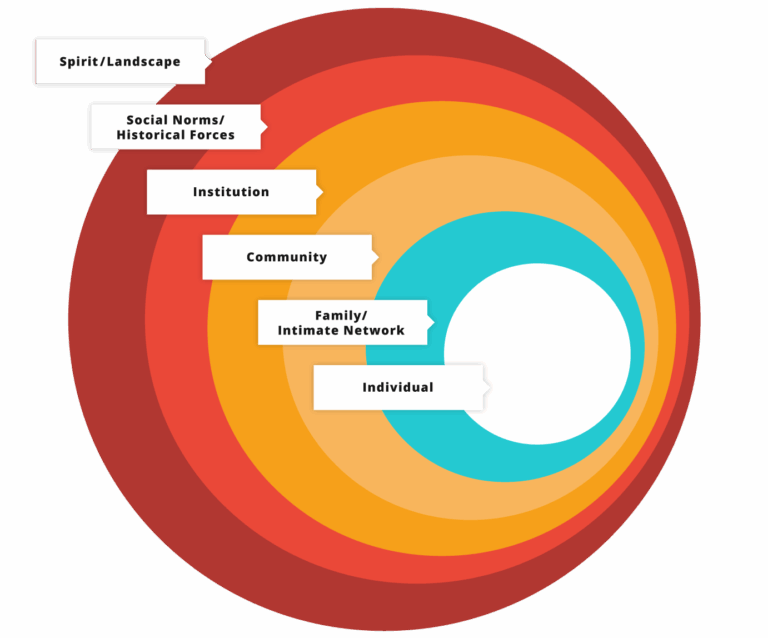
Sites of Shaping and Change helps us to understand the many experiences and forces that affect us. It also helps us see how interactive these Sites are. The bad news, from a social justice perspective, is that we inadvertently embody societal norms we don’t believe in, and often don’t embody the values we believe in. From a politicized somatics vantage point, this is completely understandable and there is a lot we can do about it. We are shaped by all of these Sites, and also have the power to shape them. The larger the circle, the more people and power it takes to transform the Site. All these Sites are interconnected, with social norms, culture, and the economy expressing through each one.
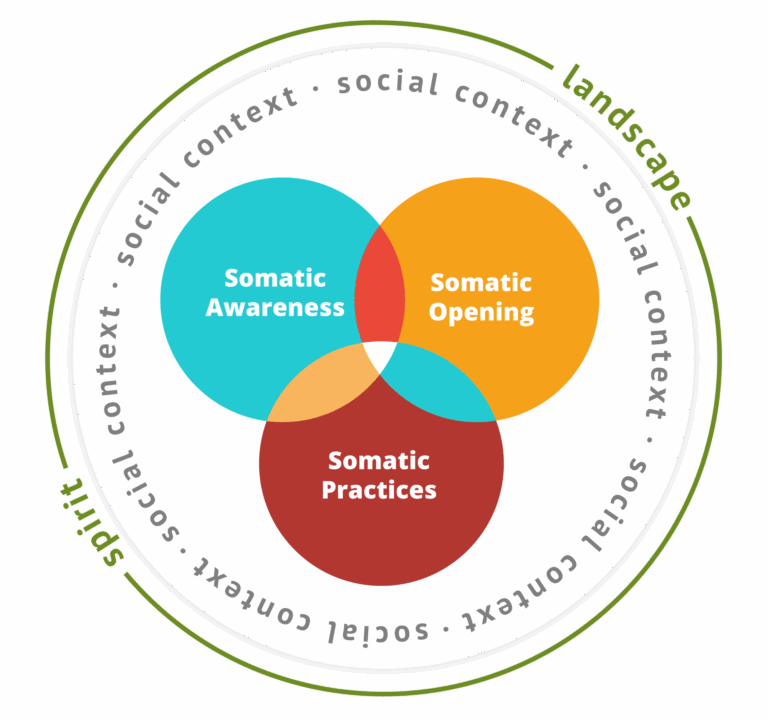
This graphic helps us to understand the various aspects of somatic transformation. Somatic Awareness develops our ability to feel and work with sensation, emotions, and aliveness in the felt senses. We learn to come ‘back into our bodies’ and live inside of our own skin, recognizing the information and wisdom there. We become more aware of others’ aliveness and feeling as well. Somatic Practices help us develop new skills that we can act on, making sure they don’t remain just a good idea. Through practice, we train new skills into our nervous systems so that we have these as a choice, even under pressure. New practices can include; centered boundaries, consent, requests, making offers/ proposals, somatic assessments, and more. Somatic Opening is deconstructing embodied habits and getting to heal and attend to what they have been taking care of. This makes spaces for a new practice to deepen and root. The broader circles of Social Context and Landscape/Spirit acknowledge the context and conditions in which all transformation is happening, and must be addressed in all levels of change.
Soma speaks to the living body — whole, sensing, alive. It is through the body that we remember, resist, and reimagine. Across generations, Black, Indigenous, Asian, and other communities have carried and cultivated embodied, communal, and spiritual ways of healing. generative somatics is rooted in these living lineages — lineages of resilience, resistance, and deep knowing.
In many somatics and embodiment spaces, the names and contributions of white men are often the ones remembered, recorded, and passed on. We honor that there have been many teachers, many methods — some uplifted, some overlooked — all shaping the ground we now stand on.
And we remember that this ground is not neutral. Our lineage has unfolded within the long arc of colonization and displacement, of slavery and survival, of gendered and economic violence, of systems designed to disconnect. These histories live in our bodies, as do the lineages of transformation. They shape our practice, our politics, and our shared path forward.
This lineage of politicized somatics begins with the understanding that we are all shaped by our families, communities, societies, and environments. We embody the systems around us — including systems of oppression. These systems do not teach us the skills we need for liberation: interdependence, grounded strategy, transformative conflict, centered boundaries, and collective resilience. To move toward liberation, we must notice our automatic responses, build new skills, and practice new ways of being.
Systems of oppression have left many of us disembodied and disconnected — from ourselves, our communities, our cultural practices, and our embodied ways of knowing. Somatics offers a practice-able theory of change that works through the body — both individual and collective — to move us toward personal, community, and systemic transformation. It recognizes that deep individual healing and growth must be aligned with liberatory collective practices and connected to structural change. These dimensions of change are inextricable — they support and strengthen one another.
We define transformation as the ability to take new action aligned with our values and visions — even under the same old pressures. It shows up in how we act, relate, perceive, and show up in the world — as individuals and as collectives. Transformation is change that holds over time.
Somatics is a resilience-based methodology that works through the body — engaging our sensations, emotions, thoughts, actions, values, commitments, and longings. It helps us shift from unconscious reaction toward greater choice. This approach honors the wisdom in our survival strategies while also offering tools to transform patterns that no longer serve us. We work through three core components of change: somatic awareness, somatic opening, and somatic practices.
In dominant Western culture, we’re taught to view the body as an object — a mechanical system of bones and tissues, disconnected from meaning or intelligence. Somatics challenges this. The body is a site of learning, memory, and transformation. Our tissues carry intelligence. Our muscles carry memory. Our shape is a record of everything we’ve survived — and a powerful resource for change.
Somatics for organizing, movement-building, and action understands individuals and collectives as shaped by biology, emotion, psychology, history, and culture — all under the influence of both oppressive and liberatory forces. These influences become embodied: in our habits, worldviews, ways of relating, automatic actions, and silences. Over time, what we embody becomes familiar — it feels “normal,” even when it conflicts with our values. Our embodied habits also shape our identities and how we see ourselves and each other.
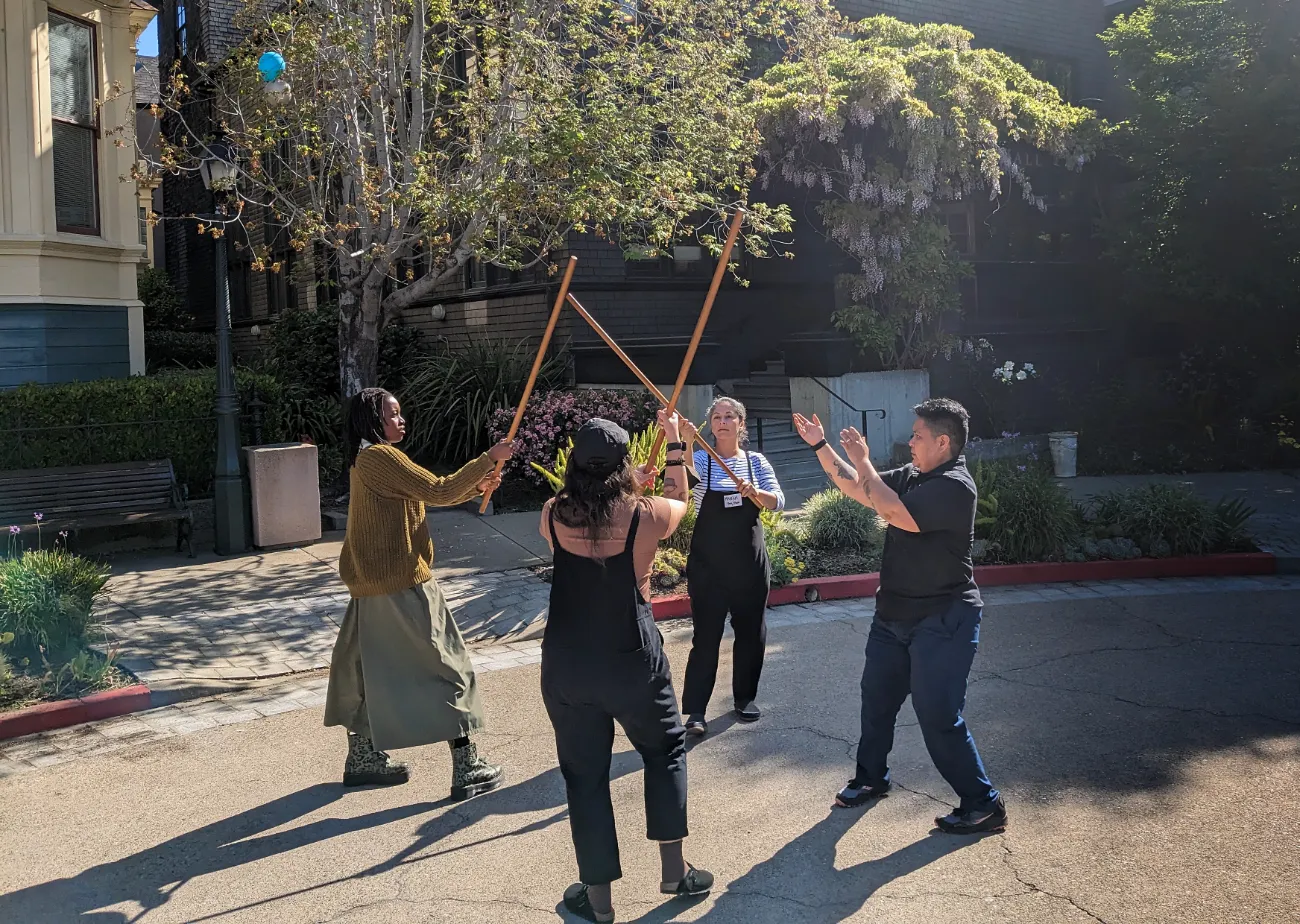
Somatics is not just a body-based exercise, a mindfulness practice, or an add-on to therapy or coaching. In a disembodied culture, the language of “somatics” is often applied loosely to anything that involves the body. But not all body-based work is somatics.
Today, some somatic approaches are being institutionalized in Western psychotherapy and academic programs — often stripped of a political framework. Many of these approaches fail to address the social conditions we live in, or the forces of power and violence that shape us. Without a political analysis, trauma rooted in racism, gender oppression, class inequality, ableism, or state violence is left unnamed — or only partially addressed.
A politicized somatics understands that embodiment is not just personal — it is collective and political. It gives us a pathway to build power, deepen presence, grow capacity, and develop the embodied skills we need to create systemic change. Without this analysis, somatics risks becoming another individualized healing method — disconnected from liberation.
Our goal is to produce the following five embodied skills and competencies in individuals, teams, and formations that will concretely magnify the power of our participants and Movement Partners.
Select an impact:
Taking action under pressure from core values.
Individuals and groups will be able to return to a positive vision and act from their values under pressure; to identify what they care about and make it known to others.
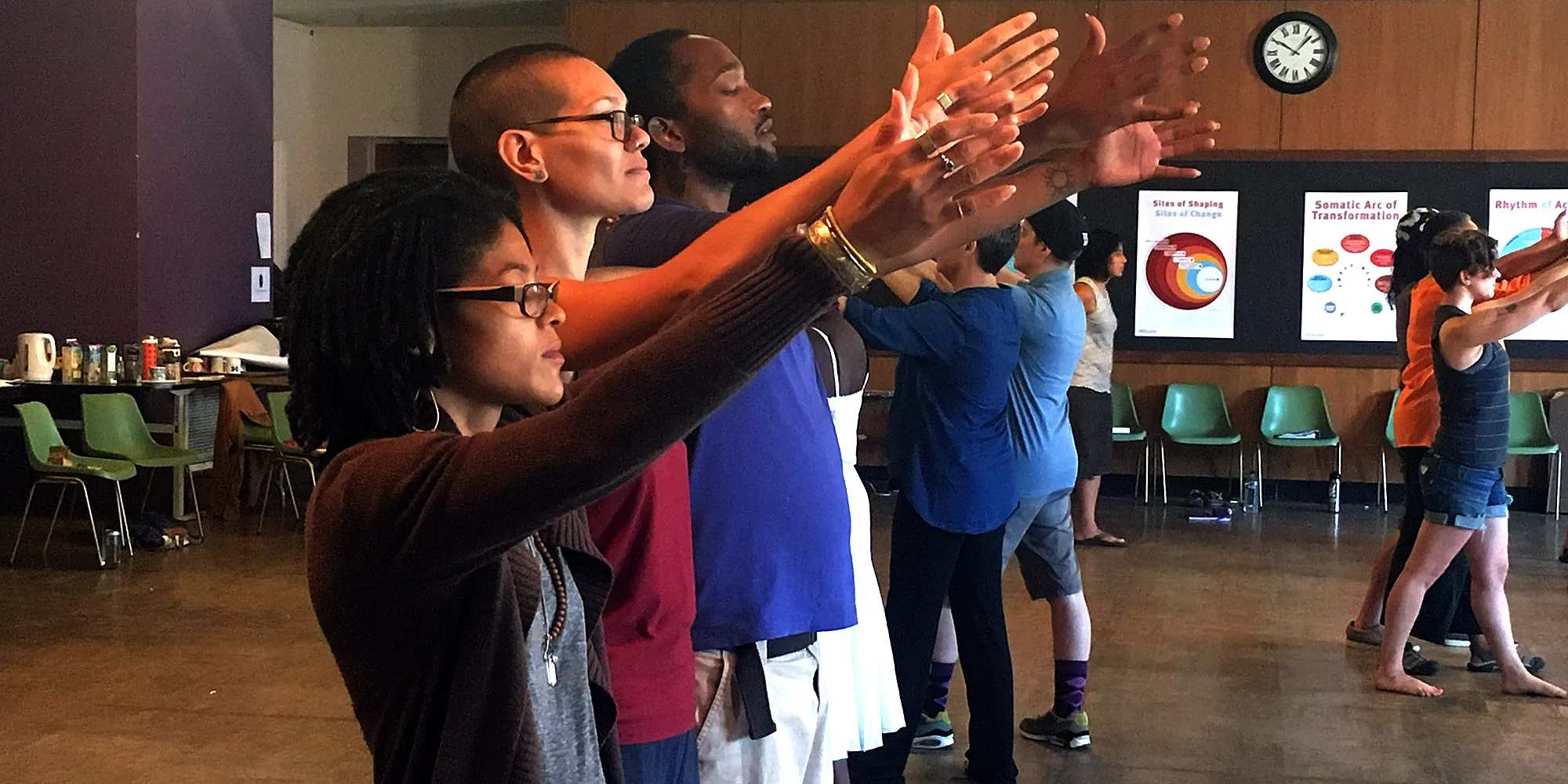
Cultivating trust and relationship.
Individuals and groups will be able to form and sustain trusting, authentic relationships, compel others, and be a supportive presence amidst difficulty. They will be able to give and receive grounded feedback, informed by an awareness of how we have been individually and collectively shaped by trauma and oppression.
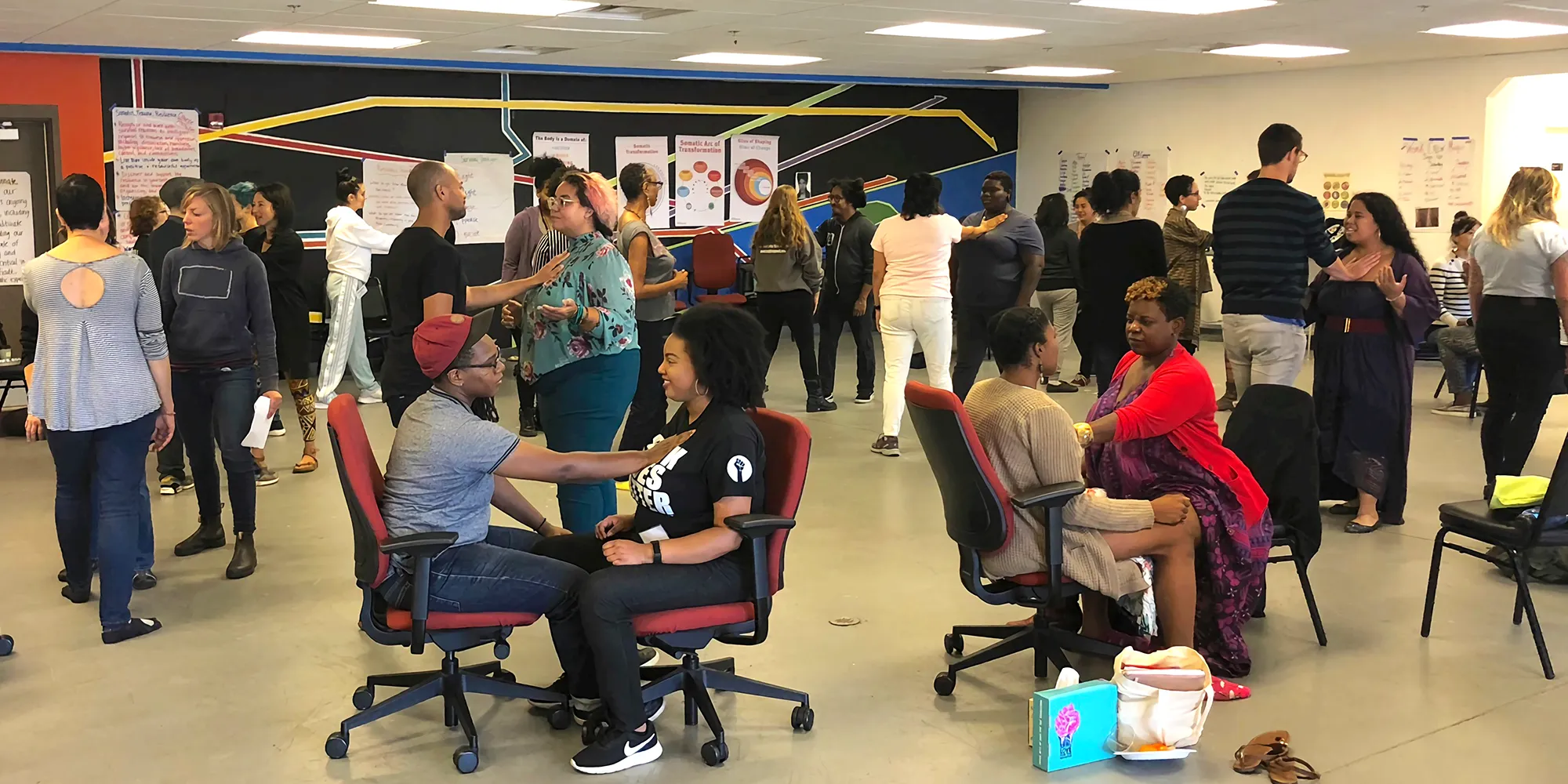
Working collaboratively across differences.
Individuals and groups will be able to effectively collaborate with others in teams, partnerships, alliances, and remain responsive to evolving conditions.
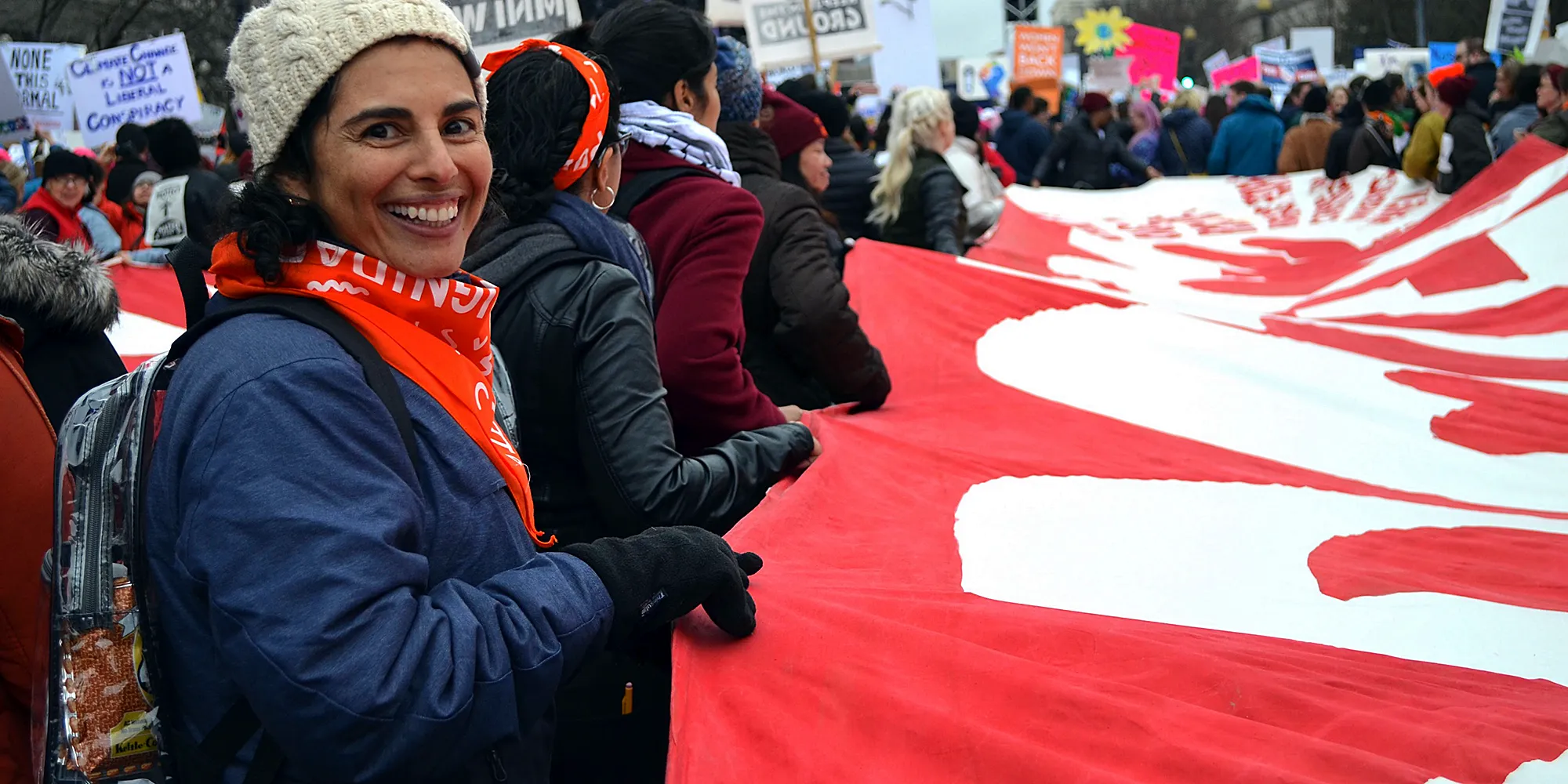
Moving in unified, values-aligned direction.
Individuals and groups will be able to take powerful, life-affirming actions with others rooted in shared values and vision, through clear and compelling requests, declines, promises, celebration, and evaluation.
Turning rupture into transformation.
Individuals and groups will be able to effectively engage and transform interpersonal and organizational breakdown and ask for and offer accountability and repair, in a way that generates more dignity and trust for everyone involved.
The five embodied skills and competencies we aim to produce will strengthen our movements by having the following four impacts in organizing and movement building:
Interested in learning more about our strategic priorities? Download our Strategic Priorities summary PDF here.
Campaigns and actions will be more powerful, life-giving and vision-driven in the face of ongoing repression, conflict, exploitation, and backlash.
Movements will organically contribute to the development of alternatives for responding to violence and emergencies in our communities in ways that do not engage the State. They will advance transformative justice—ways of addressing harm and violence that produce safety, healing, agency, and accountability while undermining and transforming oppressive systems and practices.
Organizational and movement culture will shift towards greater mutual belonging, dignity, and power, with an increased ability to hold complexity and address, heal, and transform internalized oppression and trauma.
Movements will more effectively grow and scale work across identity, worldview, and geography; and make the most strategic and bold contribution to the creation of a just, loving, and sustainable society.
gs offered an integrated methodology that wove together:
Each offering helped build capacity for long-term, visionary movement work. gs regularly ran:
✔️ 7 public courses per year
✔️ 7 active movement partnerships
✔️ Two tracks of teacher training
✔️ Special offerings in trauma healing, supervision, and practitioner development
gs-supported leaders and campaigns became:
generative somatics (gs) began as a bold experiment: Could somatics—rooted in healing, trauma transformation, and embodied leadership—become a tool for liberatory movements?
We believe deeply that personal, collective, and systemic transformation are interdependent. gs helped thousands of movement leaders, organizers, and practitioners align their actions with their values, grow their resilience, and create cultures of healing within justice movements.
Though gs as an organization has sunset, its impact and methodologies continue through the leaders, practitioners, and communities who shaped and carried this work.
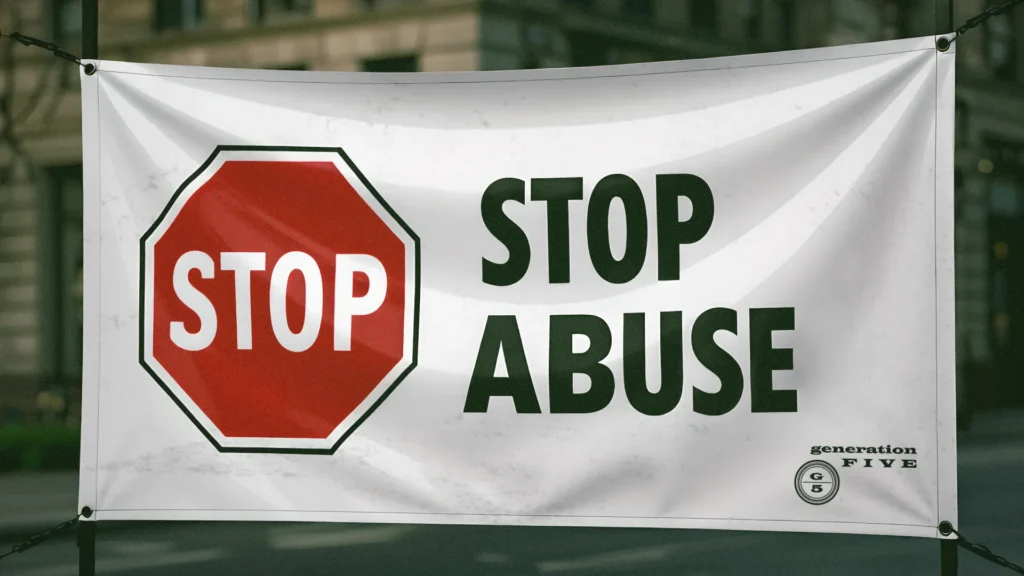
generationFIVE (gen5), was the first site of integrating somatics into social justice training—especially around child sexual abuse and transformative justice.
The Somatics & Trauma course emerged from this work, blending somatics with intersectional political analysis and trauma healing.
This foundational period set the tone for future integration of movement-building with embodied practice.
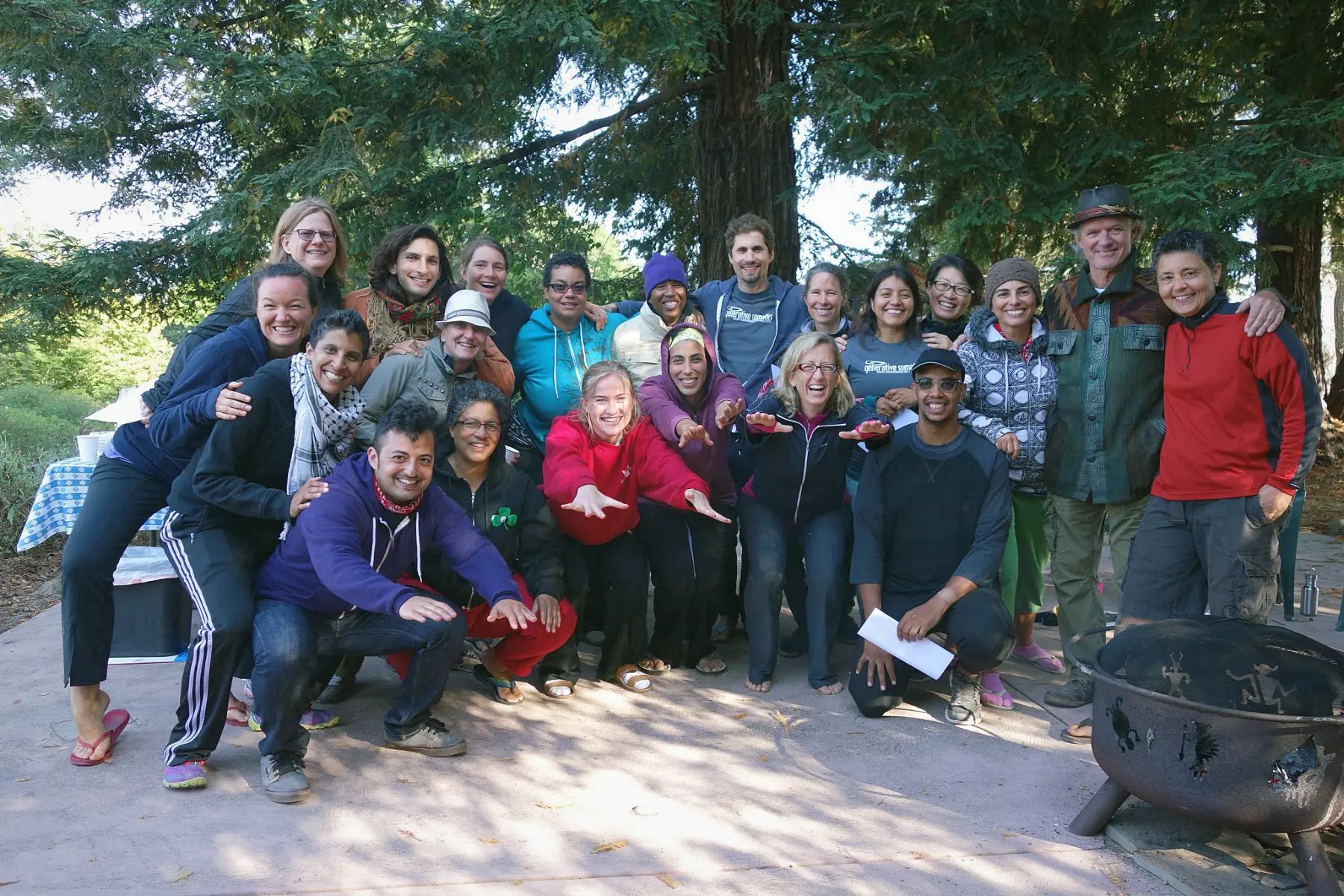
A core team of teachers—including Elizabeth Ross, Jennifer Ianiello, Liu Hoi-Man, Lisa Thomas-Adeyemo, and Vassilisa Kapila — began teaching Somatics & Trauma through an intensive apprenticeship with Staci Haines.
In 2009 – 2010, Spenta Kandawalla, Staci Haines and Social Justice Leadership (SJL) held the Somatics & Social Justice Collaborative (SSJC) bringing together movement leaders across sectors from across the country for a 16-day program to explore: Is somatics relevant to organizing and movement building? The answer was a resounding yes.
Spenta and Staci co-founded gs, grounded in early partnerships between practitioners and organizers across multiple organizations.
Key Questions:
Is somatics relevant to movement?
Who is interested/ compelled?
How do we more deeply integrate a left analysis?
Can somatics affect more than personal change (i.e. strategy, vision, organizing approaches, etc.?)
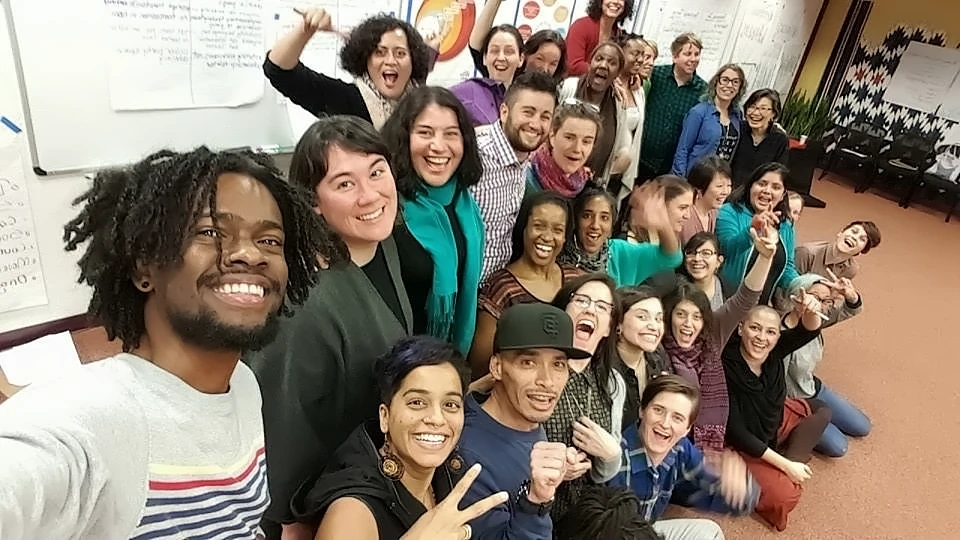
gs launched its first official Movement Partnership with the National Domestic Workers Alliance (NDWA), co-creating the SOL (Strategy, Organizing, and Leadership) training series for Domestic Workers.
gs entered a unique “tandem” relationship with the Strozzi Institute (SI), sharing infrastructure, values, and curriculum development.
Courses widen from Somatics and Trauma to include courses focused on Somatic Bodywork and leadership courses such as Transformation in Action, later known as Embodied Leadership courses. gs intentionally prioritized BIPOC poor and working class enrollment in courses.
Teacher Training formally began, eventually growing to include over 35 teachers across movement organizations like Black Organizing for Leadership and Dignity, Racial Justice Action Center, and Asian Pacific Environmental Network.
Key Questions:
Whoops this is going faster than we thought, what do we do?!
What Political Education does gs staff and those in teacher training need?
Do we focus on depth and/or spread?
Which organizations do we prioritize working with?
How do we train and organize practitioners?
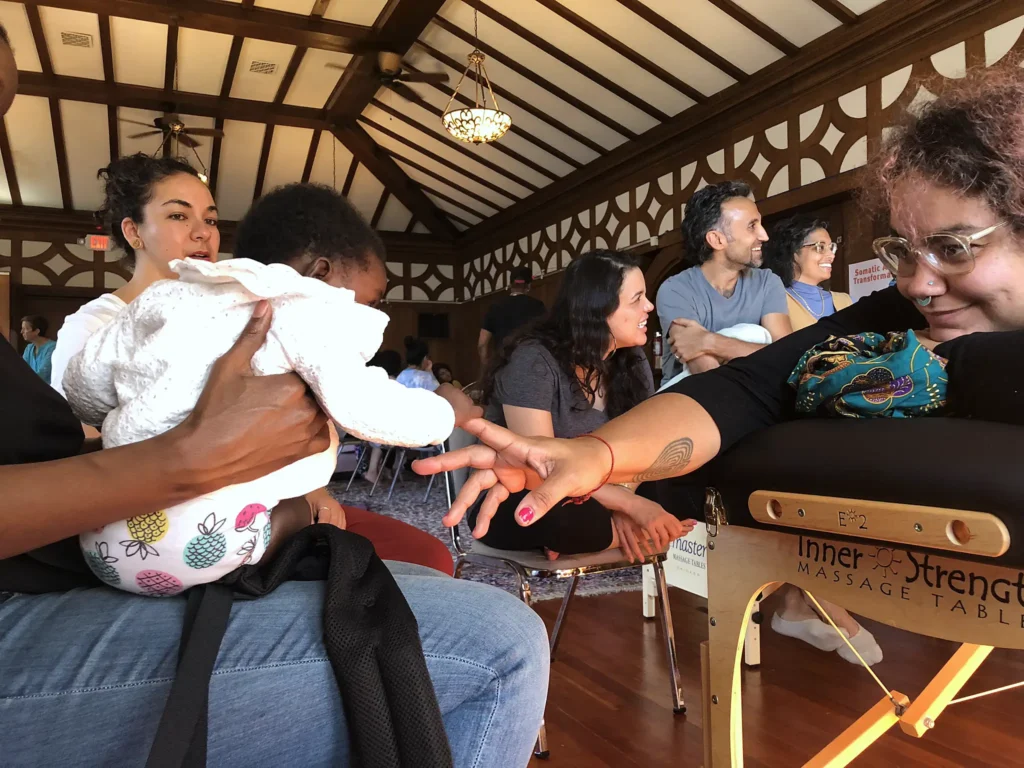
A strategic planning process with a leadership body of staff and practitioners clarified key tensions: how to remain majority BIPOC-led while navigating white-led institutions, balancing depth vs. spread, and meeting increased demand.
gs expanded into Europe, deepening its international scope.
gs launched signature programs:
More than a dozen Movement Partnerships were active during this time, including National Domestic Workers Alliance (NDWA), Reach AYC, Racial Justice Action Center (RJAC), Power U/Miami Workers Center, APEN, CHAA, LA COIL, and Center for Media Justice (CMJ).
Key Questions:
How do we make our most strategic impact?
What do we need to pivot, what outreach do we need to align with our Strategic Priority areas?
What staffing supports gs now?
How do we meet the needs of both advanced teachers and new/intermediate teachers (2017-2 tracks)?
Do we go wide or keep going deep?
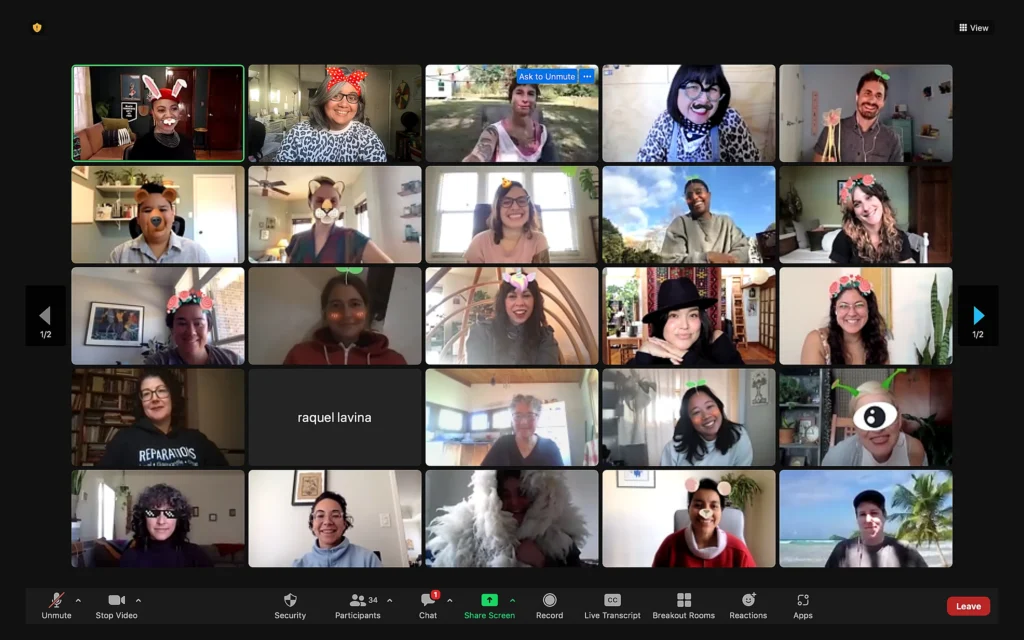
This period marked a profound shift for gs—internally, programmatically, and culturally. The world changed rapidly, and so did gs.
In 2020, most of gs’s longstanding leadership transitioned out of their roles. A new wave of staff and leaders, largely BIPOC and queer, stepped into the work during a global pandemic and deepening social and political crises. At the same time, many of gs’s lead teachers were stepping back, pausing teaching, or moving in other directions. As a result, formal programming paused.
And yet, the work didn’t stop.
During the height of the pandemic, gs practitioners and teachers self-organized to support frontline organizers and communities. They held spaces, shared tools, and offered politicized somatics practices to help people move through trauma, grief, and uncertainty.
Amidst these changes, gs began facing and naming patterns that had limited our collective power—including centralized decision-making, white supremacy culture, and anti-Black racism. These dynamics surfaced in group conversations, documentation efforts, and community accountability processes.
This reckoning called for a radical reimagining of gs. Not just as an organization, but as a practice space rooted in integrity, interdependence, and transformation.
Even as the formal structure shifted, gs’s impact deepened through grassroots offerings, including: